Difference Between Soccer Ball Sizes: What Changes?
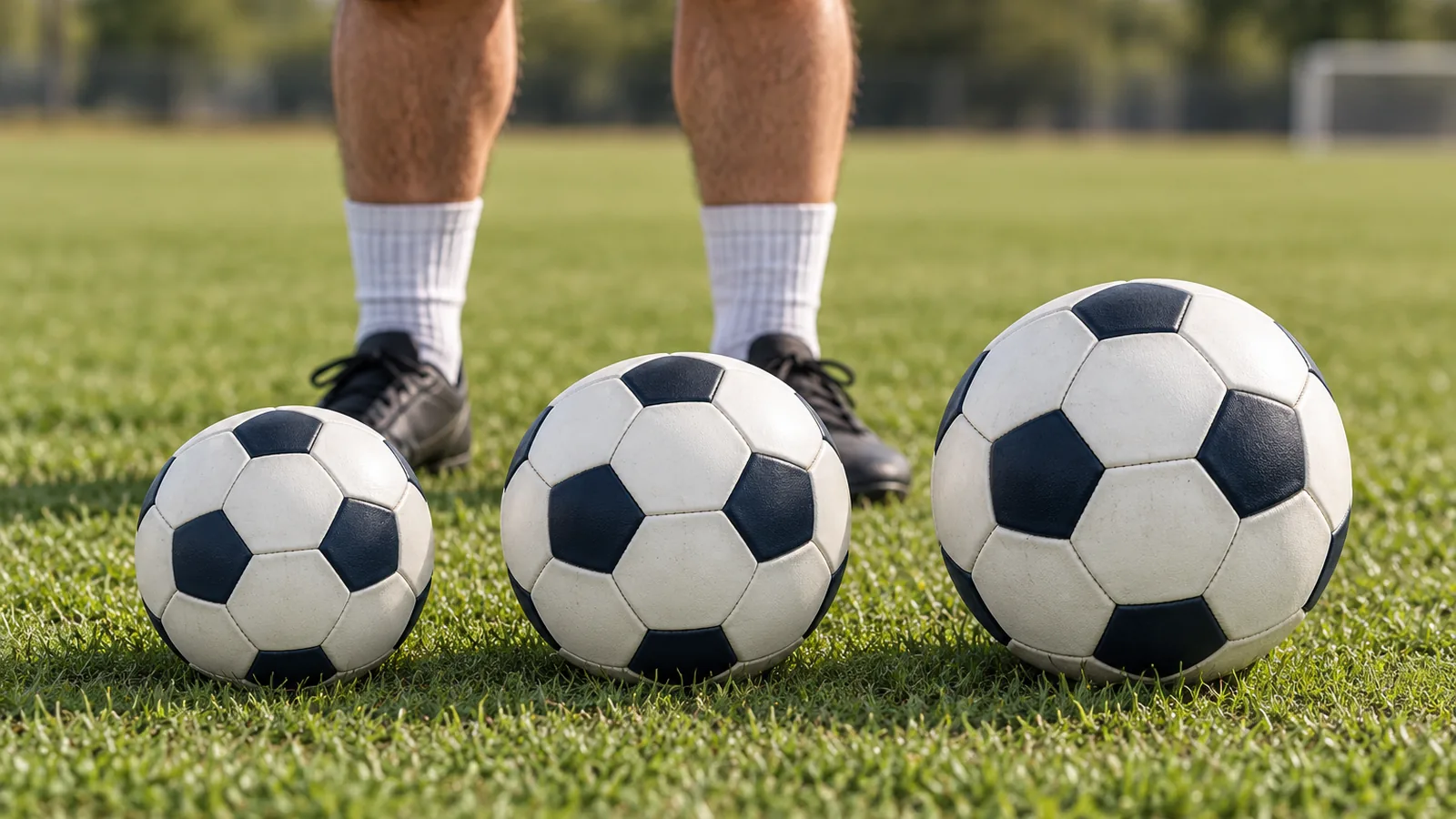
The difference between soccer ball sizes is mainly circumference and weight: size 3 measures 23–24 inches around, size 4 measures 25–26 inches, and size 5 measures 27–28 inches. Age guidance can narrow your choice, but organized matches use the size required by the league. For size 5 match balls, the weight must be 410–450 g at the start of play.
Check competition rules before buying or bringing a ball, especially near an age cutoff, where recommendations can differ. The common mistake is treating an age chart as a substitute for local match requirements.
Key Takeaways
- Size 3: 23–24 in circumference suits juniors, according to Nike.
- Size 4: 25–26 in circumference suits youth, according to Nike.
- Size 5: 27–28 in circumference and 410–450 g at match start meet IFAB rules.
- U13 rules differ: US Youth Soccer lists size 5, while U.S. Soccer prefers size 4.
- Check league rules first for match balls, since age guidance can differ from local requirements.
Quick Verdict on Soccer Ball Sizes
Size 3 is the smallest standard youth match size in this comparison, size 4 is the intermediate youth size, and size 5 is the adult and older-youth standard. The difference between soccer ball sizes is mainly circumference, with size 5 also carrying a defined match-weight range under the rules for adult matches.
For youth play, size 3 measures 23–24 in around and size 4 measures 25–26 in. Nike recommends size 3 for juniors and size 4 for youth, but its chart gives no weight range for either size. These smaller balls can suit younger players, but the right match ball depends on the competition’s rules.
Size 5 measures 27–28 in around and is Nike’s adult recommendation. For matches governed by IFAB Law 2, a size 5 ball must weigh 410–450 g at match start. That makes size 5 the standard for adults and many older-youth matches, though U13 guidance differs: US Youth Soccer lists size 5 for U13 and U14, while U.S. Soccer prefers size 4 for U13.
If age guidance conflicts, follow your competition’s rules before buying or bringing a ball to a match. US Youth Soccer reports: The governing body or league determines the required match size, so an age chart is a starting point rather than a substitute for checking local rules.
Soccer Ball Sizes Side by Side
Circumference is the clearest difference between sizes: each step up gives you a larger ball, while the available weight information is limited. Nike gives circumference recommendations for sizes 1, 3, 4, and 5; IFAB sets match weight and pressure requirements for size 5.
| Size | Circumference (in) | Weight (g) | Pressure | Stated use or recommendation |
|---|---|---|---|---|
| 1 | 18–20 | — | — | Skill training |
| 3 | 23–24 | — | — | Junior |
| 4 | 25–26 | — | — | Youth |
| 5 | 27–28 | 410–450 at match start | 0.6–1.1 atmosphere at sea level | Adult; match requirements |
Chart of the table above.
The size 5 diameter is approximately 8.5–8.8 in, calculated from circumference; IFAB specifies circumference, not diameter. Pressure is a separate match specification, not a size measurement. Nike gives no weight range for sizes 1, 3, or 4, so the table leaves those cells blank rather than implying they share the size 5 match requirement.
Which Ages Use Each Ball Size?
US Youth Soccer’s common guidance moves players from smaller balls to size 5 as they get older, but U13 guidance differs between US Youth Soccer and U.S. Soccer. Check your competition’s rules before choosing a match ball.
| Age group | Ball size |
|---|---|
| U8 and younger | 3 |
| U10 and younger | 4 |
| U11–U12 | 4 |
| U13–U14 | 5 |
Chart of the table above.
State associations may make exceptions to US Youth Soccer’s common age guidance, so local rules can change which size your team uses. The U13 difference matters most: US Youth Soccer lists size 5 for U13 and U14, while U.S. Soccer recommends size 4 for U13 or a lighter, lower-pressure size 5, and prefers size 4. That leaves room for a league to set a different match requirement, even when a general age chart points to another ball size.
For a player near an age cutoff, use the size required by the competition rather than assuming the general age guidance settles the choice. Check with your state association or league before buying balls for matches, especially for U13 players, where the recommendations differ.
How Size Affects Practice and Skill Work
A size 1 ball is a supplementary tool for skill practice, while a size 2 is sold for informal skills or casual use. The difference between soccer ball sizes matters here: size 2 has no universal circumference or weight across the reviewed sources. One manufacturer lists a circumference of 51–56 cm and a weight of 230–280 g, while Nike’s chart leaves size 2 out.
A smaller ball can give you a different feel during practice, but the available youth guidance doesn’t show that a size automatically improves skills such as dribbling, passing, or shooting. FIFA’s recommendations draw on input from federations, academies, and manufacturers, along with a review of health research; they don’t establish a direct skill benefit from any one ball size.
The reviewed sources also don’t quantify a general performance penalty from using a ball that’s oversized or heavier for a player. For practice that prepares you for matches, use the size recommended for your age group and competition, then check league rules for the required match ball.
For casual practice, size 1 or size 2 can work for different purposes: size 1 is listed for skill training, while size 2 is marketed for informal skills or casual use. Neither replaces your competition’s match ball when you need to practice with the same equipment used in games.
Which Soccer Ball Size Should You Choose?
Choose the ball size required for matches first; use size 1 or 2 only as supplementary skill balls.
- Parent buying for a young player: Check the player’s league rules before buying. The difference between soccer ball sizes matters for match equipment, so choose the required size rather than relying only on general age guidance.
- Youth coach or league organizer: Confirm the competition’s required size and use it for match play.
- Player practicing at home: Use the same size you use in matches for match-like practice. A size 1 or 2 can supplement skill work.
- General equipment shopper: Choose a league-required size if the ball is for organized matches. Consider size 1 or 2 as supplementary options for skills or casual use.
Frequently Asked Questions
Is a size 2 soccer ball used for matches or just skill practice?
A size 2 ball is mainly for informal skills or casual use, rather than organized matches. Since there’s no universal size 2 circumference or weight, check your league’s required match size and use that for match preparation.
How much does a size 4 soccer ball weigh?
A size 4 soccer ball weighs 11–13 oz (312–369 g) under US Youth Soccer’s guidance. Nike lists the size 4 circumference as 25–26 in but doesn’t give a weight range, so check the competition’s requirements when buying a match ball.
Are futsal balls sized differently from regular soccer balls?
Futsal ball dimensions aren’t specified in the available guidance, so don’t assume an outdoor soccer ball size applies. Check your competition’s futsal rules for the required ball before buying or bringing one to a match.
How often should I check a soccer ball’s air pressure?
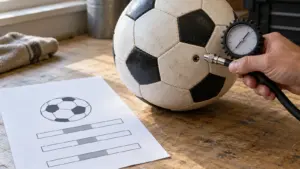
Check pressure before play and adjust it to the ball’s stated range; IFAB’s size 5 match-ball pressure is 0.6–1.1 atmosphere at sea level. The guidance gives a match requirement, not a routine checking schedule, so follow your competition’s rules for organized games.
Does a larger soccer ball change how far it travels when kicked?
The available guidance doesn’t quantify how ball size changes kicking distance, so you can’t use size alone to predict how far a ball will travel. For match-like practice, use the size required by your competition, since the sources recommend matching practice equipment to the player’s age group and competition.
Conclusion
If you’re buying for organized play, choose the size your league requires; if you’re practicing at home, use that same size for match-like practice. For extra skill work or casual use, add a size 1 or 2 rather than replacing your match ball.
Before you buy, check the league or state association’s current rules, especially for a player near an age cutoff. That confirms the match size and avoids relying on a general age chart where guidance differs.
Sources
- Soccer Ball Size Chart (nike.com)
- usyouthsoccer.org (usyouthsoccer.org)
- Law 2 – The Ball | IFAB (theifab.com)
- 942c7d97-6294-495c-8c41-c92383d636df.filesusr.com (942c7d97-6294-495c-8c41-c92383d636df.filesusr.com)
- Soccer ball diameter by size (cleatandcone.com, 2026-10-17)
- justballsltd.com (justballsltd.com)
- inside.fifa.com (inside.fifa.com)
- forza.com (forza.com)
- nike.com (nike.com)