What Soccer Equipment Does a Child Need?
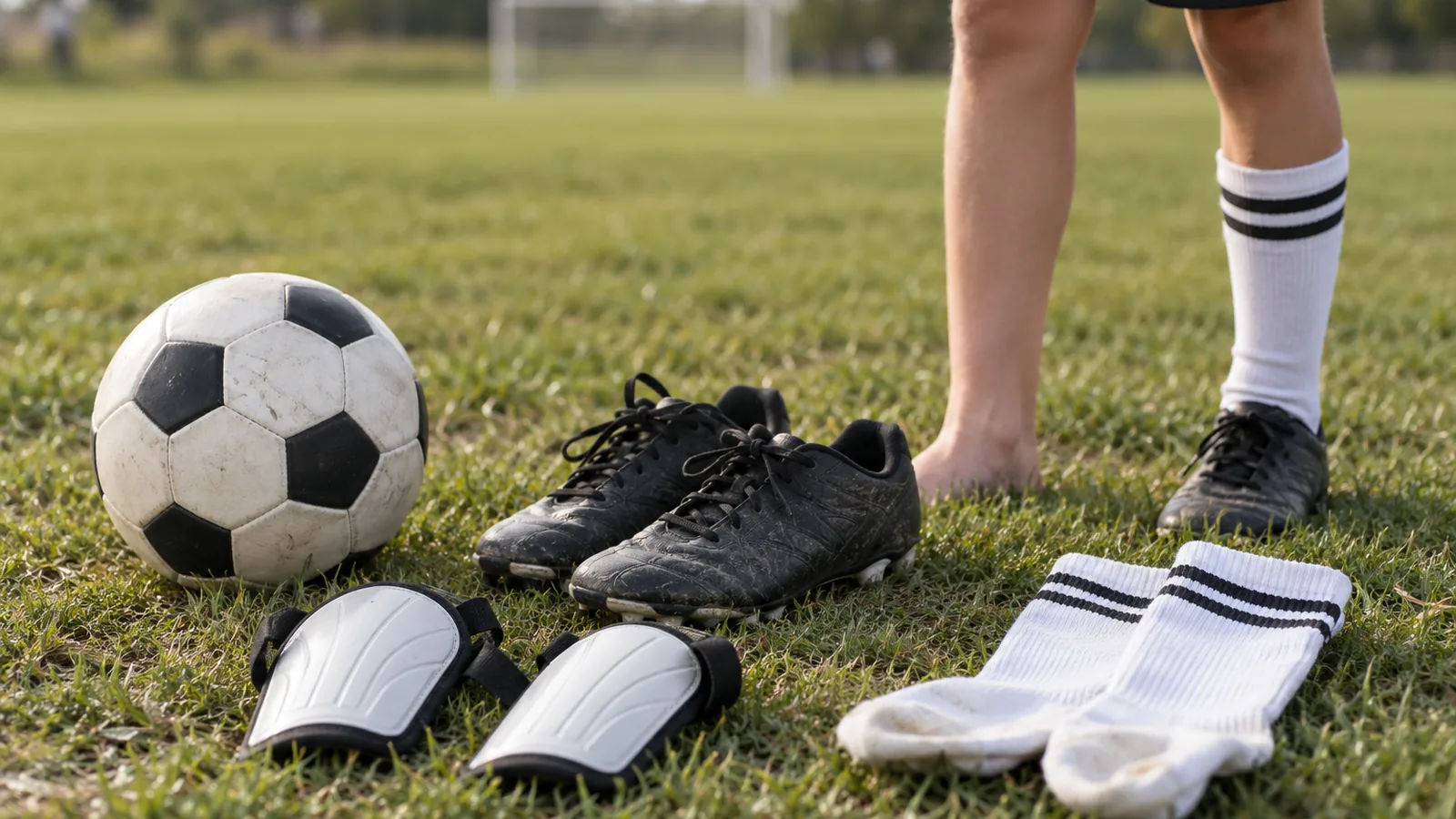
A child typically needs 4 essentials: an age-appropriate soccer ball, shoes suited to the playing surface, shin guards, and socks to cover them. The right ball size and allowed footwear can vary by team or league, so check its equipment rules before buying.
What soccer equipment does a child need?
Quick answer: A child needs a shirt with sleeves, shorts, socks, shin guards, and soccer shoes for matches. Choose an age-appropriate, properly inflated ball, but check the team’s rules to confirm the size and whether your child needs to bring one. Footwear depends on the playing surface and league rules, so confirm what’s allowed before buying.
- Clothing: Pack a shirt with sleeves, shorts, and socks.
- Protection: Use shin guards that fit appropriately and stay covered by socks.
- Shoes: Choose footwear suited to the surface and allowed by the league.
- Ball: Get the size specified by the team, and bring it if requested.
- Check the team list: Pack a water bottle if the team asks for one.
Which items belong in a child’s soccer kit?
A match kit includes a shirt with sleeves, shorts, socks, shin guards, and footwear; the league may also set requirements for cleats, a ball, or a water bottle. Shin guards must be covered by socks, while goalkeeper gloves are optional.
| Item | Guidance |
|---|---|
| Shirt | Sleeves required for matches |
| Shorts | Required for matches |
| Socks | Required for matches; cover shin guards |
| Shin guards | Required for matches |
| Footwear | Required for matches; choose for the surface |
| Soccer ball | Age-appropriate and properly inflated; whether families bring one varies |
| Water bottle | Some leagues ask families to bring one |
| Goalkeeper gloves | Optional |
The main distinction is between match equipment and items set by the team: a ball and water bottle may be requested, so check the team list before packing. Cleat rules vary by league: one local league requires them, while another says regulation cleats are helpful but not required. On artificial turf, shoe choice depends on the turf and league rules; artificial-ground cleats have shorter studs, while turf shoes have multiple small rubber studs. Indoor soccer shoes have a flat rubber outsole rather than outdoor studs.
How do you choose the right ball size?
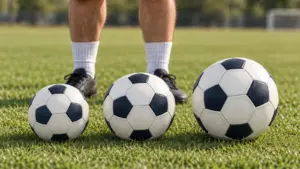
Choose the ball size listed by your child’s league or team for their age group; age-group charts can differ. The 2012 US Youth Soccer development model uses size 3 for U-6 and U-8, size 4 for U-10 and U-12, and size 5 for U-14 through U-18+. Local programs don’t always follow the same age cutoffs, so confirm the required size before you buy.
The US Youth Soccer model lists these ball circumferences:
- Size 3: 23–24 in, for U-6 and U-8 in that model.
- Size 4: 25–26 in, for U-10 and U-12 in that model.
- Size 5: 27–28 in, for U-14 through U-18+ in that model.
The differences between local charts matter most around the age cutoffs. Fayetteville’s Spring 2025 chart assigns size 3 to U-5/U-6 and U-7/U-8, size 4 to U-9/U-10 and U-12, and size 5 to U-16. A municipal program’s 2026 materials assign size 3 to U-3–U-6, size 4 to U-7–U-10, and size 5 to U-12 and U-15. Check the league’s current chart rather than choosing from age alone.
Important
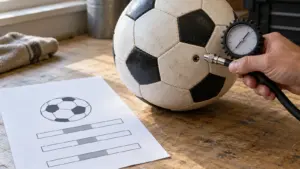
A properly inflated ball is part of choosing the right setup, alongside an age-appropriate size.
If your league doesn’t specify a size, ask the coach or organizer which chart the team follows. Whether you need to bring a ball also depends on the club: AYSO describes one as ideal for individual practice, while some leagues ask families to bring one.
Match soccer shoes to the playing surface
Choose soccer shoes by playing surface: use outdoor cleats on grass, surface-specific shoes on artificial turf, and flat-soled shoes indoors. The surface determines the outsole, but league rules can also affect whether cleats are allowed or required.
On natural grass, outdoor soccer cleats provide traction with their studs. League rules vary, and some allow athletic shoes without cleats if the referee considers them safe.
For artificial turf, check what kind of surface the child will play on and follow the league’s guidance. Artificial-ground cleats have shorter studs, while turf shoes use multiple small rubber studs; recommendations vary with the turf and league rules. Avoid treating those options as interchangeable without checking which surface the team uses.
If the child plays on more than one surface, ask the coach or league which footwear is acceptable for each one before buying.
Fit matters as much as the outsole. Try shoes on with soccer socks, then check that they feel comfortable and secure and that the laces can be snugged. Leave about 10–15 mm of toe room and choose a toe box at least as wide as the child’s foot. Check shoe size every 4–6 months as the child grows.
Note
AYSO’s 2025 national rules allow athletic footwear with or without cleats when the referee considers it safe, but local rules may set different requirements.
Check the fit before the first practice
Check the fit before the first practice by inspecting shin guards, putting on the full kit, checking shoe fit, and confirming team rules.
Inspect the shin guards. Make sure they’re in place and can be covered by the child’s socks. AYSO rules require shin guards covered by socks at practices and matches, with a stated beach-futsal exception.
Put on the full practice outfit. Have your child wear the soccer socks they’ll use with their shoes, and pull them over the shin guards. Remove jewelry before play; covering it with tape isn’t permitted.
Check the shoes with the soccer socks on. The shoes should feel comfortable, fit securely, and lace snugly. Leave 10–15 mm of toe room, and check that the toe box is at least as wide as your child’s foot. The American Podiatric Medical Association recommends checking shoe size every 4–6 months.
Confirm requirements with the team before buying or packing gear. Ask which footwear is allowed, whether your child needs to bring a ball, and whether the team requires a water bottle. Rules differ: some recreational leagues accept tennis or athletic shoes, while others require cleats. AYSO describes a ball as ideal for individual practice, while some leagues ask families to bring one. Check the team’s ball-size guidance too, since age-group recommendations vary between programs.
If your child needs other protective gear, check with the coach or league before using it. IFAB permits non-dangerous items such as gloves, headgear, facemasks, and soft, lightweight padded knee or arm protectors.
Frequently Asked Questions
How much should I spend on soccer equipment for a child?
There’s no single required budget, so start with the basics: a ball in the team’s assigned size, suitable shoes, shin guards, and socks. Check team rules before buying because ball size, footwear, and whether your child needs to bring a ball can vary by program. Add optional gear only if the coach or league asks for it.
Where can I buy affordable youth soccer gear?
Compare prices at sporting-goods stores, team sales, and general retailers, then confirm the gear meets your league’s rules before you buy. Check the required ball size and shoe type first, since local ball charts and footwear rules vary. For shoes, prioritize a secure, comfortable fit with soccer socks on.
How do I wash and care for a child’s soccer uniform?
Follow the care label on each garment, and let the uniform dry fully before storing it. Check the team’s equipment list for any uniform-specific instructions, since requirements can vary by club.
What should a child bring to soccer practice besides their uniform?
Bring shin guards and soccer shoes, and pack a properly inflated ball and water bottle if the team requests them. Ball and water-bottle requirements vary by club. Make sure socks cover the shin guards, and have your child remove jewelry before play.
What soccer gear does a child need for cold or rainy weather?
Use the required kit and shoes suited to the field, then ask the coach what extra layers are allowed for that team. For wet or muddy grass, soft-ground cleats have longer studs; they’re intended for those conditions rather than dry ground. Check footwear rules before choosing shoes, since league requirements differ.
Conclusion
If you already have the basics, hold off on buying extras until the coach confirms the team’s rules. If you’re starting from scratch, ask for the required ball size and approved footwear first, then choose the remaining kit to fit your child comfortably. Your next step is to get the team’s equipment list and check each item against what your child already owns before you shop.
Sources
- Law 4 – The Players' Equipment (theifab.com)
- learning.ussoccer.com (learning.ussoccer.com)
- shenandoahcountysoccerleague.com (shenandoahcountysoccerleague.com)
- fayetteville-ar.gov (fayetteville-ar.gov)
- leaguecitytx.gov (leaguecitytx.gov)
- tippsoccer.org (tippsoccer.org)
- ayso.org (ayso.org)
- hollistonsoccer.org (hollistonsoccer.org)
- underarmour.com (underarmour.com)
- adidas.com (adidas.com)
- cdn2.sportngin.com (cdn2.sportngin.com)
- wiki.ayso.org (wiki.ayso.org)
- apma.org (apma.org)