
Shin Guard Size Chart: How to Find the Right Fit
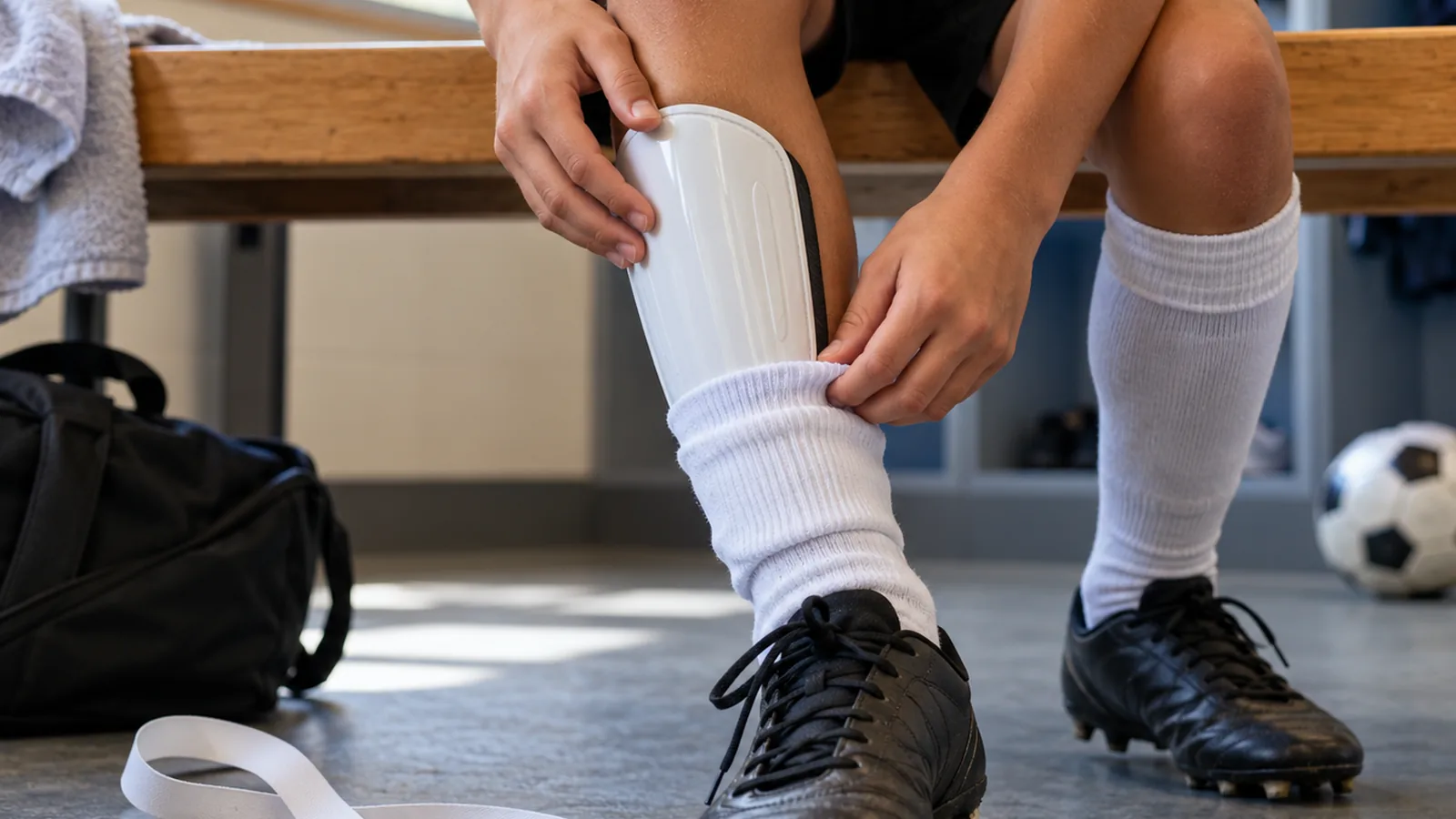
A shin guard size chart matches your height or shin length to a size, with the guard ending about 1 in above your shoe. Sizing methods vary by brand, so use the chart for the specific model and check that the guard covers your shin without restricting movement.
How do I use a shin guard size chart?
Quick answer: Treat the chart as a starting point: sizing methods vary by brand, so use the chart for the specific model. If it asks for shin length, measure from just below the knee bend to about 1 in (2.5 cm) above your shoe; if it asks for height, use your height instead. Choose a guard that covers most of the area from ankle to knee, ends about 1 in (2.5 cm) above your shoe, and doesn’t restrict movement.
- Check the model’s chart: Match your measurement to the method and size ranges it lists.
- Try the guard on: Wear it with your soccer socks and move to check that it stays in place and keeps your shin covered.
- If you’re between sizes: The available guidance gives no general rule to size up or down, so use the model’s sizing information and check the fit.
How to measure for shin guards
Find the shin’s endpoints. Locate the bend just below your knee and the point about 1 in (2.5 cm) above the top of your shoe. These landmarks define the shin length used by a soccer fitting guide.
Measure between the landmarks. Use a measuring tape to measure from just below the knee bend to about 1 in (2.5 cm) above the shoe. Keep the tape along the front of your lower leg, following the area the guard needs to cover.
Use the measurement with the right chart. Check the sizing information for the specific guard you’re considering. Some charts use shin length, while Nike’s chart uses player height, so don’t compare a shin measurement with a height range.
Measure height if the product chart asks for it. Stand straight and measure from the floor to the top of your head, then compare that result with the chart’s height ranges. Nike bases its shin guard sizing on player height; its chart is specific to Nike products.
- Choose the chart’s measurement method: If the product chart lists height, use your height; if it lists shin length, use your shin measurement. The available sizing guidance supports both approaches, depending on the chart.
- Treat age labels as a guide, not a body measurement: Some shin guard labels use age, but the fitting guide also describes a general junior/senior dividing point at 5′4″.
- Check the result against the intended coverage. The measured guard should cover most of the area from ankle to knee, with its lower end about 1 in (2.5 cm) above the shoe. The FA advises covering a good proportion of the shin, since smaller micro or mini pads cover less.
Note
If your measurement falls at a chart boundary, use the specific product’s sizing information and try the guard on; the available guidance doesn’t give a general rule to size up or down.
How should shin guards fit?
Shin guards should cover a good proportion of your shin, sit above your shoe, and stay covered by your soccer socks without restricting movement. Coverage matters most: a guard that’s too small leaves more of your shin exposed, and smaller pads may increase injury risk.
When you try a pair on, check that it:
- Covers the shin: It should protect most of the area from ankle to knee, with the lower edge about 1 in (2.5 cm) above the top of your shoe.
- Feels comfortable: Check how it feels in your usual soccer socks, since shin guards are worn under them.
- Stays in position: Move in the guards and check that they continue to cover the intended area. Try them on before deciding, since sizing varies by manufacturer.
- Fits under your socks: Your knee-length soccer socks should cover the pads entirely.
If you’re choosing between guards, favor the one that provides the intended coverage and feels comfortable without limiting movement, rather than choosing a smaller pad just because it fits inside your sock.
What changes the size you need?
The size you need can change by brand, product, and the sizing method that brand uses, so use the chart for the specific guard you’re considering. A height-based chart and a shin-length guide measure different things, so compare each size label and range with its own chart.
Nike’s chart uses player height and provides separate categories for kids and adults, with age ranges listed for its kids’ sizes. Another soccer fitting guide notes that some shin guards use age labels, while a soccer-club equipment guide says sizing varies by manufacturer.
Sport can also affect what coverage you should prioritize. The available fit guidance here is for soccer: it recommends covering a good proportion of the shin, and the FA warns that smaller micro or mini pads cover less of it and may increase injury risk. Don’t apply soccer guidance as a universal sizing rule for other sports.
Age labels can help you read a particular chart, but they don’t establish a universal age-to-size match. Nike lists kids’ and adults’ categories separately, and the reviewed manufacturer and governing-body sources don’t specifically advise whether children should wear adult shin guards. Use age labels only with the chart for that brand; compare the player with the chart for the exact product.
Note
The reviewed manufacturer and governing-body sources don’t give a general instruction to size up or down between sizes, so choose using the specific product’s sizing information rather than guessing.
Shin guard size chart by measurement
Nike’s shin guard size chart uses player height, with separate kids’ and adult ranges; treat it as Nike-specific, not a universal sizing standard. Use the chart for the Nike product you’re considering, and check the fit on the player rather than assuming another brand follows the same ranges.
| Group | Size | Height (in) | Age |
|---|---|---|---|
| Kids | S | 48–51 | 4–6 |
| Kids | M | 51–55 | 7–9 |
| Kids | L | 55–59 | 10–12 |
| Adults | XS | 55–59 | — |
| Adults | S | 59–63 | — |
| Adults | M | 63–67 | — |
| Adults | L | 67–71 | — |
| Adults | XL | 71–79 | — |
Several size boundaries meet exactly, so a height at the edge can appear in two adjacent ranges. The kids’ L and adult XS ranges also overlap, which means height alone doesn’t resolve which group to choose. Nike lists kids’ sizes by age as well as height, but the chart doesn’t establish a general rule for choosing adult guards for children. For a different brand, use that product’s own chart; sizing varies by manufacturer.
Frequently Asked Questions
Can children wear adult shin guards?
Yes, if the specific guard fits the child and covers most of the shin without restricting movement. Check the product’s own sizing chart and try the guard on, since brands use different sizing methods and the available guidance doesn’t set a general rule for children wearing adult sizes.
How do I keep shin guards from sliding down?
Wear the guards under soccer socks, then move around in them to check whether they stay in place and keep the shin covered. If they shift, try another size or model and repeat the fit check, since sizing varies by manufacturer.
Should I replace old or cracked shin guards?
Replace a cracked guard if it can no longer sit securely or cover the intended area. The fit guidance prioritizes covering most of the shin, and smaller pads cover less of it and may increase injury risk.
Are soccer shin guards required in games?
Yes, in FA Mini-Soccer, shin pads must be covered entirely by knee-length socks. Check the rules for your competition, and make sure your socks cover the guards completely.
Can I wear shin guards without soccer socks?
Soccer guards are worn under soccer socks, so check the fit with the socks you plan to wear.
Conclusion
If your height or shin measurement points to a size, use the chart for that exact model; if you’re between options, choose the guard that covers most of your shin, stays above your shoe, and feels comfortable under your soccer socks without limiting movement. Next, try it on with the socks you’ll wear, move around, and check that it stays in place. If coverage or movement feels wrong, try another size or model and repeat the fit check.
Sources
- cdn1.sportngin.com (cdn1.sportngin.com)
- Adults' and Kids' Shin Guards Size Chart (nike.com)
- dt5602vnjxv0c.cloudfront.net (dt5602vnjxv0c.cloudfront.net)
- thefa.com (thefa.com)
- fulltime.thefa.com (fulltime.thefa.com)
