How to Anchor a Soccer Goal Safely
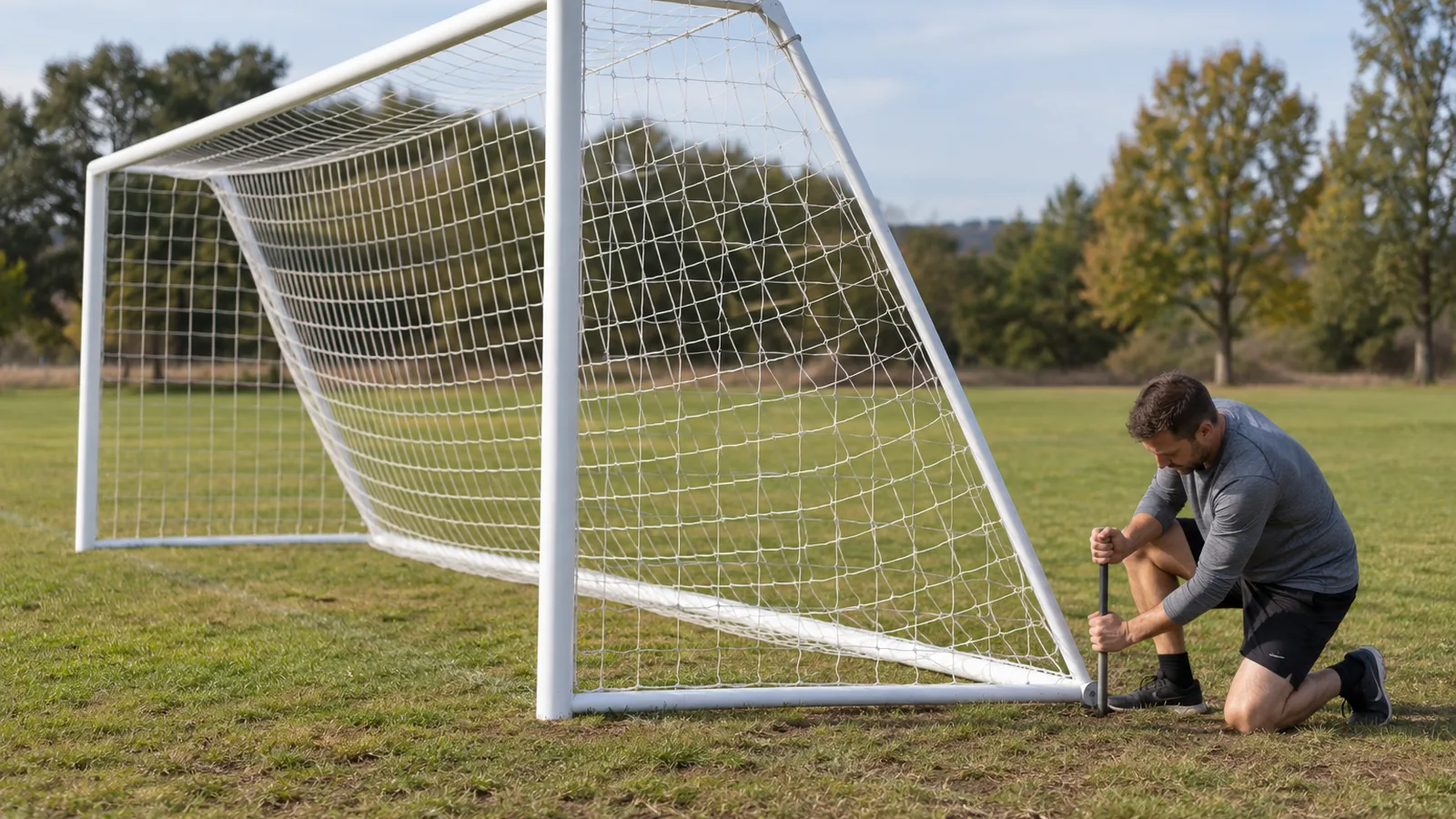
To handle how to anchor a soccer goal, match an approved setup to its model and surface; for natural loam, Kwik Goal recommends four 16-inch steel pegs. The anchor type and number change with soil, moisture, and goal weight, so confirm the setup fits your field and check that the goal stays secure before play.
How do you anchor a soccer goal?
Quick answer: Anchor the goal at all times with a method approved for its model and playing surface. There’s no universal anchor count: the right type and number depend on soil type, soil moisture, and total goal weight. Use the goal’s designated anchor points, check the connecting hardware before every use, and keep the goal out of play if you can’t confirm it’s secure.
- Natural surface: For Kwik Goal goals, use four 16-inch steel pegs on natural surfaces, especially loam.
- Sandy soil: Kwik Goal offers four 18-inch steel portable augers for softer soil.
- Surface you can’t penetrate: Use sandbags or other counterweights suited to the goal model.
- Before play: Check that the anchors and fastenings are in place and secure; replace damaged or missing fasteners.
Gather the Goal’s Approved Anchors
For a Kwik Goal model on natural ground, the approved anchor depends on the soil and goal design. Net pegs secure only the net and must not be used to anchor the goal.
| Anchor option | Supported setup |
|---|---|
| Steel pegs, 16 in | Natural surfaces, especially loam; one set of four per goal |
| Steel portable augers, 18 in | Sandy soil; one set of four |
| Sand-filled anchor bags | Full-size 8 × 24 ft Kwik Goal goals; six bags recommended |
| Semi-permanent ground anchors | Natural surfaces; one set per goal |
Choose anchors that match both your goal model and the playing surface. These options apply to Kwik Goal products, not every goal. On artificial surfaces, plan ahead for Kwik Goal’s semi-permanent anchors.
Before gathering supplies, identify the goal model and surface, then confirm which anchor is approved for that combination. Keep net pegs separate from goal anchors: they hold the net, not the frame.
How Do You Anchor a Soccer Goal?
Use the anchor type and number approved for your goal and suited to the field, then secure the anchors and check the goal before play.
Check the goal and its connecting hardware. Look for damaged or missing fasteners and replace them before use; check the hardware before every use.
Set the goal on a level field. CPSC advises using movable soccer goals only on level fields.
Identify the approved anchor setup for your goal and surface. Options include augers, buried semi-permanent anchors, pegs or stakes, J-hooks, and sandbags or other counterweights. Choose based on the soil, its moisture, and the goal’s weight. Net pegs secure only the net, not the goal.
Install the anchors at the goal’s designated points. Use the installation details for the specific goal and anchor system. For example, Kwik Goal’s 2026 International Stadium Match Goal instructions place the ground-frame anchor in its slot and call for a spacer that leaves the anchor top ¾ in (20 mm) below the field surface. That setting is specific to that model.
Secure the goal and tighten its fastenings. Keep the anchors in place and fully tighten the fastenings before use; the required hardware and fit depend on the goal’s approved anchoring setup.
Check the setup before play. Check the goal and anchors before use, and don’t allow anyone to climb on or hang from the goal or net.
Secure or store the goal when it’s not in use. Remove the net and secure or store the goal.
Choose Anchors for the Playing Surface
Choose anchors based on your playing surface and goal design: use ground-penetrating anchors where the surface allows them, and counterweights where it doesn’t. Check that the method suits both your surface and goal, since anchor recommendations vary by model.
For natural surfaces, Kwik Goal’s steel pegs are hammered through openings in the base frame into the ground. Semi-permanent anchors have steel bases cemented into the ground with removable bolts, and work best on natural surfaces. Confirm that the specific anchor is approved for your goal model before choosing it.
For artificial turf or another surface that can’t be penetrated, CPSC identifies sandbags or other counterweights as an anchoring option. Kwik Goal recommends six sand-filled anchor bags for its full-size 8 × 24 ft goals, but that quantity is model-specific. Don’t apply it to a different goal without confirming the matching recommendation.
CPSC also lists augers, buried semi-permanent anchors, pegs or stakes, and J-hooks as possible soccer-goal anchoring options. The list doesn’t establish that every option suits every surface or goal.
Before buying or installing an anchor, match it to your goal model and playing surface. Verify that it’s approved for both, and get the model-specific recommendation if you can’t confirm.
Check the Goal Before Play
Check the goal before play by confirming its approved anchors are present, all fastenings are tight, and the frame stays secure when checked. CPSC notes that anchor type and quantity depend on soil type, soil moisture, and total goal weight, so there’s no universal anchor count or weight.
Use your goal’s model-specific instructions to confirm that the anchors are in their required positions and remain in place. Inspect the anchor connections directly rather than relying on a visual glance at the goal.
Recheck the setup after use, and before play if the goal has been moved or its anchors or fastenings have been disturbed. The available guidance doesn’t specify a movement test, force, or pass threshold, so don’t invent one. If you can’t confirm that the approved anchors are installed and secure, keep the goal out of play until the setup is corrected.
Warning
Don’t use the goal when high winds threaten. A secure check before play doesn’t override that warning.
If your playing surface or soil conditions change, confirm that the existing anchor method remains appropriate before using the goal. Anchor selection depends partly on soil type and moisture, and the guidance gives no universal check or threshold for changing methods. Ask the goal’s manufacturer or a qualified installer to verify a setup when its suitability is unclear.
Frequently Asked Questions
What should you do if a soccer goal moves after anchoring?
Take the goal out of play and check that its approved anchors are present, in position, and secured, with all fastenings tight. If you can’t confirm the setup is secure, correct it before use. Anchor choice depends on the goal’s weight and the soil type and moisture, so don’t add an unapproved weight or anchor as a quick fix.
Where can you find the approved anchoring instructions for a soccer goal?
Find the anchoring instructions for your specific goal model in its manual or from the manufacturer, then match them to your playing surface. Check that the instructions cover both the goal and the anchor system you’re using; a setup shown for one model may not apply to another. Keep the goal out of play until you can confirm its approved setup.
How often should soccer goal anchors be inspected?
Inspect the anchors and connecting hardware before each use; replace damaged or missing fasteners before the goal is used. Recheck the setup if the goal has been moved or an anchor or fastening has been disturbed, and keep the goal out of play if you can’t confirm it’s secure.
Can you use temporary anchors on artificial turf?
Yes, sandbags or other counterweights can anchor a goal on artificial turf when the surface can’t be penetrated. Choose a weight and placement approved for your goal model, since anchor requirements depend on the goal’s weight and setup. Quantities recommended for one goal may not fit another.
What should you do with a soccer goal during high winds?
Keep it anchored or counterweighted while it’s stored, and secure or store it when it isn’t in use. Before play resumes, check that the anchors remain in place and the fastenings are tight.
Conclusion
If the model, surface, or anchor fit is uncertain, keep the goal out of use and get the model-specific recommendation before buying or installing anything.
Sources
- Just a moment… (kwikgoal.com)
- cpsc.gov (cpsc.gov)
- kwikgoal.com (kwikgoal.com)
- kwikgoal.com (kwikgoal.com)
- kwikgoal.com (kwikgoal.com)
- kwikgoal.com (kwikgoal.com)
- kwikgoal.com (kwikgoal.com)
- kwikgoal.com (kwikgoal.com)