Agility Ladder Drills for Soccer: How to Train
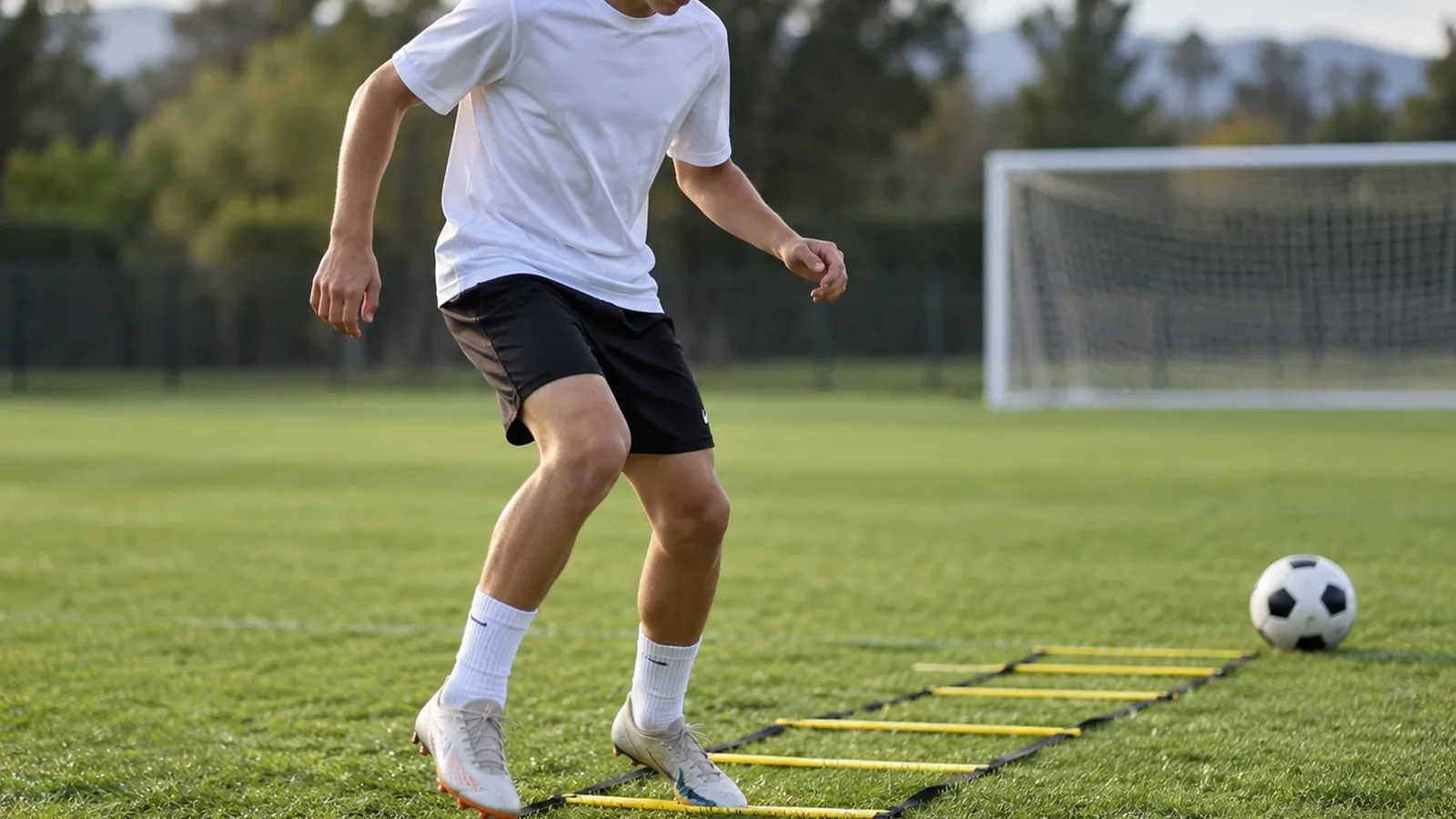
Agility ladder drills for soccer can use 4 basic patterns: single-step, in-in/out-out, lateral shuffle, and icky shuffle, followed by a soccer action such as a pass or change of direction. Keep steps controlled and choose repetitions and rest to fit the player’s skill and goal, since no universal dose is established.
Quick answer
How do you do agility ladder drills for soccer?
Use a short sequence of controlled footwork patterns, then add a soccer action or direction cue at the exit. Start with simple patterns and increase complexity as players’ coordination improves; the cited study used 30 seconds between repetitions and 60 seconds between sets.
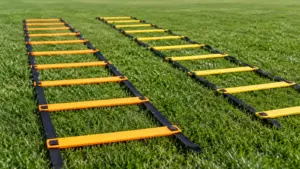
- Set up: Lay the ladder flat on clear, level ground with room to run through and turn around.
- Start simple: Alternate feet through the boxes, placing one foot in each square.
- Add patterns: Try in-in/out-out, a lateral shuffle, or the icky shuffle; demonstrate the icky shuffle’s foot order first.
- Stay controlled: Keep your body upright, coordinate your arms, land on the balls of your feet, and prioritize clean steps over speed.
- Add soccer movement: Finish with a pass, turn, dribble, shot, or direction cue.
- Use ladder work as coordination practice: Pair it with sprinting, change-of-direction practice, or reactive drills, since fixed ladder steps don’t replace those activities.
How to Set Up and Run Ladder Drills
Lay the ladder flat on clear, level ground. Leave enough room for players to run through the ladder and turn around at either end. The available guidance doesn’t establish a preferred surface or footwear for soccer ladder drills, so don’t treat one setup as a research-backed requirement.
Start with a simple pattern at a manageable pace. Have players move forward, alternating feet so one foot lands in each box. Keep the body upright, coordinate the arms, and land on the balls of the feet while working through the pattern.
Make clean foot placement the first standard. Ask players to place their feet accurately and stay controlled instead of rushing through the boxes; increase speed only when they can keep that control. The guidance supports controlled steps, but doesn’t specify a universal pace, number of repetitions, or rest period.
Important
If faster movement causes players to lose accurate, controlled steps, return to a slower pace.
Add complexity as coordination improves. Move from a simple pattern to a more complex one when players can perform the current task with control. One six-week study increased task complexity every two microcycles, but that was the study’s progression, not a required schedule for every team.
Keep the ladder’s role specific. Use it to rehearse set foot placements as coordination or warm-up work. Ladder patterns don’t replace sprinting, change-of-direction practice, or reactive drills, because the footwork is predetermined rather than a response to a changing cue.
Which Ladder Patterns Build Soccer Footwork?
Use four basic patterns to train forward foot speed, in-and-out placement, lateral movement, and coordinated side steps; keep each sequence controlled and repeatable.
- Single-step: Run forward through the ladder, placing one foot in each square and alternating feet. Keep your steps light and your upper body steady.
- In-in/out-out: Step both feet into one square, then both feet outside the ladder at the next space. Repeat that rhythm down the ladder.
- Lateral shuffle: Face sideways and stay low. Shuffle along the ladder, placing each foot in successive squares, then return while still facing the same direction.
- Icky shuffle: Step one foot into a square, bring the other foot in, then step the first foot out to the side. Repeat down the ladder, demonstrating the order first because coaches may vary which foot leads.
Land on the balls of your feet, coordinate your arms, and favor clean steps over speed. These patterns rehearse planned footwork; they don’t measure soccer agility on their own, because match play requires reacting to unpredictable cues from an opponent or the ball.
How Can Players Make Drills Soccer-Specific?
Connect a planned ladder pattern to a soccer action at the exit, then add an unpredictable cue when you want players to react. The ladder pattern stays rehearsed: players know where to place their feet, so it trains coordination rather than game-like agility.
Have a player finish the pattern, then receive and return a pass using the inside or instep. You can also have the player control the ball with the chest before passing, or head the ball back. Keep the footwork sequence simple while the player handles the ball or responds to a cue.
To build the drill, progress from a known exit action to a decision triggered by a visual or verbal signal. For example, call a direction or show a target as the player reaches the end, then have them move toward it. Make the cue unpredictable if you want to practice reactive agility, which involves decisions based on an opponent or the ball.
- Planned action: Use the same ladder pattern and exit action each time to rehearse coordinated footwork followed by a soccer skill.
- Reactive action: Vary the cue or pass so the player must decide what to do after the ladder sequence.
- Broader practice: Pair ladder work with sprinting, change-of-direction practice, or reactive drills rather than using it as a substitute.
You can make the ladder sequence more complex as players’ coordination improves; the six-week study did not include exercise-complexity progression. Treat ladder work as a short coordination or warm-up activity, since a study of youth players found it did not appear to improve physical fitness or dribbling.
Quick Reference for Soccer Ladder Drills
Progress patterns by adding a soccer action or a direction cue. Choose repetitions and rest to suit the player’s skill and training goal; the sources don’t support one universal dose.
| Drill | Footwork pattern | Main movement focus | Progression | Dose |
|---|---|---|---|---|
| One foot per square | Alternate feet, placing one foot in each box while moving forward | Forward foot placement | Add a turn, pass, dribble or shot at the exit | Adaptable |
| Two feet per square | Place both feet in each box in sequence before advancing | Controlled steps in each box | Add a pass or other soccer action at the exit | Adaptable |
| In-in/out-out | Step both feet into a box, then both outside at the next space; repeat down the ladder | Moving between the boxes and outside spaces | Add a turn, dribble or shot after the pattern | Adaptable |
| Lateral shuffle | Face sideways, stay low and shuffle along the ladder, landing each foot in successive squares | Sideways footwork | Have a partner call or point to a direction at the exit, then sprint briefly that way | Adaptable |
For controlled footwork, stay upright, coordinate your arms and land on the balls of your feet; prioritize clean steps over rushing. A study’s training schedule and one coach’s drill prescription differ, so use them as examples rather than a general prescription.
Frequently Asked Questions
How often should soccer players do agility ladder drills?
Choose a frequency that fits your practice plan and players’ coordination; there’s no universal schedule for ladder work. One six-week study had male U13 players train with ladders 3 times per week, but that was the study’s program, not a required dose for every team.
Are agility ladder drills suitable for young soccer players?
Yes, young players can use ladder drills, starting with simple patterns and adding complexity as their coordination improves. Treat the ladder as coordination or warm-up work, and pair it with soccer skills or other movement practice rather than expecting it to build fitness or dribbling on its own.
What shoes and surface should players use for ladder drills?
Use a clear, level area with enough room to run through the ladder and turn around; the available guidance doesn’t establish specific footwear or a preferred surface.
How long should an agility ladder be for soccer drills?
Pick a length that fits the pattern and available space; the examples include 10 ft and 20 ft ladders, but neither length is established as best for every player or drill. Leave room at both ends to run through the ladder and turn around.
Do agility ladder drills make soccer players faster?
Ladder drills can rehearse quick foot placement, but they don’t replace sprint training or reactive movement practice. In one study, ladder-group players improved their 10 m and 20 m sprint times, but the control group also improved and there were no between-group differences.
Conclusion
Choose a simple ladder pattern if players are still working on accurate foot placement; add a pass or direction cue once they can keep their steps controlled. Use sprinting, change-of-direction work, or reactive drills for skills the ladder can’t train by itself. For your next practice, pick one pattern, set a clear standard for clean steps, and add one soccer action at the exit. Adjust the task to the players’ skill and training goal.
Sources
- cdn2.sportngin.com (cdn2.sportngin.com)
- levelup.soccer (levelup.soccer)
- askthegaffer.io (askthegaffer.io)
- soccercoachweekly.net (soccercoachweekly.net)
- Effects of Training with an Agility Ladder on Sprint, Agility, and Dribbling Performance in Youth Soccer Players (pmc.ncbi.nlm.nih.gov)
- rondomap.com (rondomap.com)
- easy2coach.net (easy2coach.net)
- forza.com (forza.com)