Soccer Rebounder Net vs. Rebound Board: Which Should You Choose?
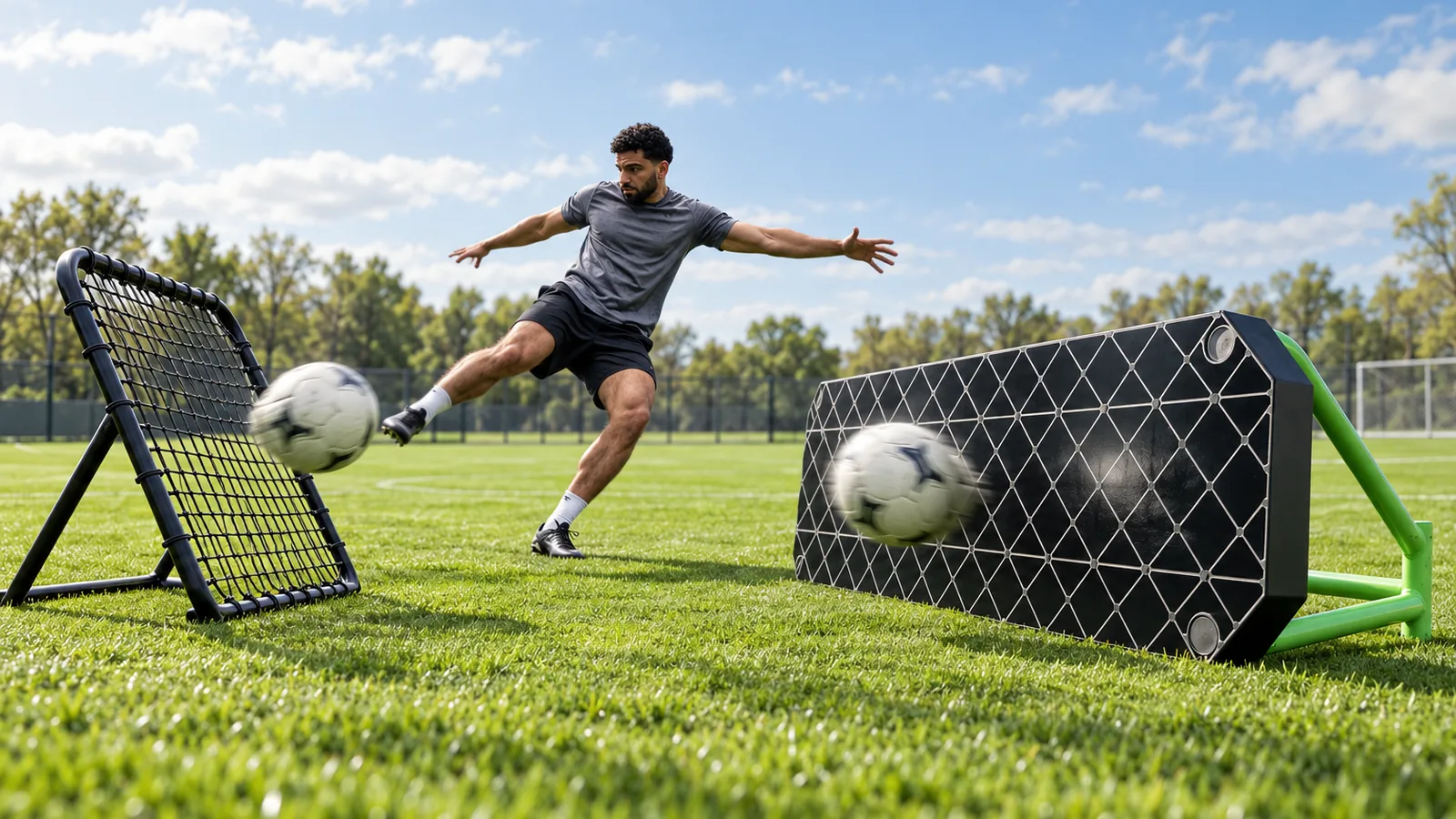
Choose a soccer rebounder net vs rebound board based on your training: nets suit aerial skills, while boards suit ground passing and first touch. Net tension and a board’s face and angle affect the ball return, so match the return to your needs.
Should you choose a soccer rebounder net or a rebound board?
Quick answer: Choose a board for ground passing, first touch and reaction work; choose a net for aerial skills and varied return heights. Both can return the ball for solo passing, control and shooting. If you train both ground and aerial skills, use both; check each model’s return and setup details because neither option has one universal ball path or setup time.
How Do Nets and Boards Compare?
Nets can return the ball along the ground or into the air when the model’s angle is adjustable, while boards return it based on the strike, face and angle. Neither has one standard return: net tension and model affect the response, and board returns vary with how you strike them.
| Option | Ball return | Training uses | Setup and space | Documented limitations |
|---|---|---|---|---|
| Net | Returns vary by model and tension; adjustable-angle models can send the ball along the ground or into the air. | Passing, touch, control and shooting; some designs and angles support aerial control, volleys, headers and goalkeeper distribution. | Some models use ground stakes on grass; SPOT may need added weight on turf or hard ground, while TEKKERS has a weighted base. Larger nets need more space. | SPOT models can give slower, looping returns; TEKKERS nets can return a firm ground pass at chest or thigh height. |
| Board | A solid face returns the ball according to the strike, face and angle. | First touch, passing, weak-foot accuracy, one-touch play, half volleys and reaction work. | The REPLAY Station is 37.5 inches wide, folds flat and takes 10 seconds to set up. Boards may suit compact patios or sidelines. | Raising the REPLAY Station’s angle can produce higher returns, though QUICKPLAY’s guide identifies nets as a better fit for broader aerial-control work. |
Some nets also create slower looping returns that give younger players more time to control the ball. A board’s angle can add higher returns, but that documented example applies to the REPLAY Station, not every board.
What Does a Rebounder Net Train Best?
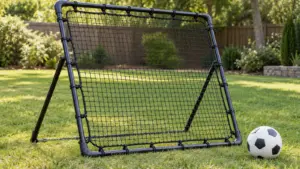
A rebounder net is best for practicing passes, first touch, control and shooting, with some designs also supporting aerial control and goalkeeper distribution. The return depends on the net’s model and tension, so check how a specific net sends the ball back before choosing it for a particular type of practice.
Some nets return the ball slowly in a loop, while others can lift a firm ground pass to chest or thigh height. Adjustable-angle models can send returns along the ground or into the air, giving you options for ground control and aerial touches.
A net can suit practice that involves:
- Passing and receiving the ball without a partner
- Controlling ground and aerial returns, depending on the net’s angle and design
- Shooting and goalkeeper distribution practice, depending on the net’s design and angle
Look for details about return speed, height and adjustment on the model you’re considering.
Choose a net when your practice calls for varied ball height or aerial control, and match the net’s documented return to the skills you want to work on.
When Is a Rebound Board the Better Choice?
A rebound board is the better choice when you want consistent ground-pass practice, weak-foot accuracy or first-touch work, and you prefer a solid surface that returns the ball based on your strike, the face and its angle.
Board returns can be predictable or less predictable, depending on the surface. The REPLAY Station’s flat face produces predictable returns, while its ribbed face produces more random ones. That makes the board a practical option if you want to repeat ground passes against a steady return, or add variation for reaction work.
You can also change the REPLAY Station’s angle to send the ball higher for half volleys or aerial control, though the guide identifies nets as a better fit for broader aerial-control work.
A board may suit a compact patio or sideline where a larger target would take up more space. The REPLAY Station folds flat for storage or transport, and QUICKPLAY describes its REPLAY Block as stable on indoor floors, turf or grass. Those details apply to the named boards, not every rebound board.
Choose a board for ground-focused practice and a solid face with a return shaped by your strike and setup. A board can also return the ball for solo passing, control and shooting practice.
Which Option Should You Choose?
Choose a rebound board for ground passing and first-touch work, a rebounder net for aerial skills, and both if you want to train both types.
If your sessions focus on receiving and passing along the ground, choose a board.
Choose a net when you want to work on aerial skills. Some SPOT models produce slower, looping returns that give younger players more time to control the ball, but that return is specific to those models, not a rule for every net. If you’re choosing for a younger player, check the return style of the particular net before buying.
If your practice regularly includes both ground passing and aerial work, using both types is a supported option. You don’t need to treat the choice as permanent: match the equipment to the skills you plan to train, and add the other type if your goals call for it.
Check the setup and return details for the specific option you’re considering, then decide based on your main training goal.
Frequently Asked Questions
Can you use a soccer rebounder indoors?
Yes, if you have enough room for the setup and returning ball. Some rebounder nets and boards are designed for indoor use, and the REPLAY Block stays stable on indoor floors. Check the specific model’s setup and ball return before using it indoors.
What size soccer rebounder should I buy?
Choose a size that fits your practice area and gives you enough target space for the drills you want to do. Larger nets need more room, while boards may fit compact patios or sidelines; one documented SPOT net measures 8 × 5 ft and is about 3 ft deep when assembled. Check the assembled dimensions before buying.
How do you secure a rebounder on artificial turf?
Use the model’s recommended base or added weight, since ground stakes are intended for grass and may not work on turf. SPOT nets may need added weight on turf, TEKKERS nets have a weighted base, and the REPLAY Station includes a sandbag for extra grip on slick turf. Check whether sand is included before setup.
Are soccer rebounders suitable for beginners?
Yes, both can support solo passing, control and shooting practice, so beginners can choose based on the skills they want to work on. A slower, looping return on some SPOT nets can give younger players more time to control the ball, but check the specific model’s return style.
Can you use a soccer rebounder in wet weather?
Yes, if the model and surface are suitable and you can keep the rebounder stable. For slick turf, the REPLAY Station includes a sandbag for extra grip, though sand isn’t included. Check the manufacturer’s setup guidance for your surface and secure the rebounder before practice.
Conclusion
If your sessions focus on ground passing and first touch, pick a rebound board; if you want aerial returns, choose a net. If you train both, consider both rather than expecting one option to cover every need. Before you buy, check the specific model’s return style, angle options and setup requirements, then match those details to the skills you plan to practice.
Sources
- quickplaysport.us (quickplaysport.us)
- quickplaysport.us (quickplaysport.us)
- Soccer Rebounders (quickplaysport.us)
- quickplaysport.us (quickplaysport.us)
- quickplaysport.us (quickplaysport.us)
- goals4sports.com (goals4sports.com)
- forza.com (forza.com)